
Ever thought about protecting your idea without a real model? Patent law might amaze you with its open approach to new ideas.
The United States Patent and Trademark Office (USPTO) now lets inventors protect their ideas with detailed writings and drawings. You can get a patent without a model, which is becoming more common in today’s fast world.
If you want to patent an idea without a model, you must show a clear, detailed explanation. This explanation should help someone skilled in the field make your invention.
While models can help, they’re not needed anymore. The law now looks at if your invention is new, not obvious, and useful. It doesn’t require a real model.
Key Takeaways
- Patent applications can be filed without a physical prototype
- Detailed written descriptions are key for patent success
- The USPTO values innovation over physical models
- Comprehensive drawings can replace traditional prototypes
- Knowing patent law is vital for inventors
Understanding Patents and Ideas
Understanding patents can be tricky. Inventors and innovators want to keep their new ideas safe. A patent is a strong way to protect unique ideas and stop others from using them without permission.
Patents are key for inventors to keep their creations safe. They give legal rights to new ideas. This lets creators enjoy the fruits of their hard work.
Defining Patent Fundamentals
A patent is a special right given by the government. It lets inventors control their invention for a set time. The process of applying for a patent helps creators own their invention. It stops others from making, using, or selling it without permission.
Types of Patents
- Utility Patents: Cover functional processes, machines, and technological innovations
- Design Patents: Protect unique ornamental designs of products
- Plant Patents: Safeguard newly developed plant varieties
Intellectual Property Significance
Intellectual property is very important for businesses and inventors. With 45% of businesses innovating, knowing about patents is key.
| Patent Type | Protection Duration | Key Characteristics |
|---|---|---|
| Standard Patent | Up to 20 years | Comprehensive invention protection |
| Provisional Patent | Up to 12 months | Temporary protection, establishes priority date |
It’s possible to get a patent without a prototype. But, you need good documents and clear descriptions. Inventors must be careful to protect their ideas well.
The Role of Prototypes in Patenting
Understanding prototypes is key to protecting your idea. Prototypes are important, even if not always needed. They help meet patent rules and strengthen your filing.
Prototypes are a big step in making an invention. They help inventors in many ways. A prototype makes an idea real, helping to improve and test it.
What is a Prototype?
A prototype is a first model of an invention. It shows how it works and looks. It turns ideas into something you can see and touch.
- Validate technical feasibility
- Identify and fix design problems
- Show the product to investors
Benefits of Having a Prototype
Prototypes help a lot when applying for a patent:
| Benefit | Impact |
|---|---|
| Design Refinement | Finds and fixes problems early |
| Investor Credibility | Makes it easier to get funding |
| Patent Strength | Gives detailed tech info |
When a Prototype is Optional
Not every invention needs a prototype. Software, ideas, and theories can be patented with detailed plans and drawings.
Prototypes can cost a lot, from a few hundred to thousands of dollars. Think if a prototype will really help your patent and invention plan.
Can You Patent an Idea Alone?
Understanding the invention patent process is key. Ideas alone can’t be patented. But, how you use them might be protected.
The United States Patent and Trademark Office (USPTO) has strict rules. To protect your invention legally, you must meet certain criteria:
- The invention must be novel and unique
- It should show non-obviousness to experts
- The concept must have practical use
Legal Requirements for Patents
Patent law protects real inventions, not just ideas. To patent an idea, you need to give a detailed guide. This guide should help someone skilled in the field make your invention.
Novelty and Non-Obviousness
The USPTO looks at two main things. Novelty means the invention is new. Non-obviousness means it’s not something experts would think of right away.
Written Description Requirement
You must write a detailed description of your invention. This description is very important. It shows how you’ve made your idea real.
Utility patents give exclusive rights for 20 years. Knowing these rules is vital for protecting your invention.
Steps to Filing a Patent Without a Prototype
Getting a patent without a prototype is tough. But, inventors can protect their ideas with the right help. Knowing how to file a patent is key to keeping your invention safe.
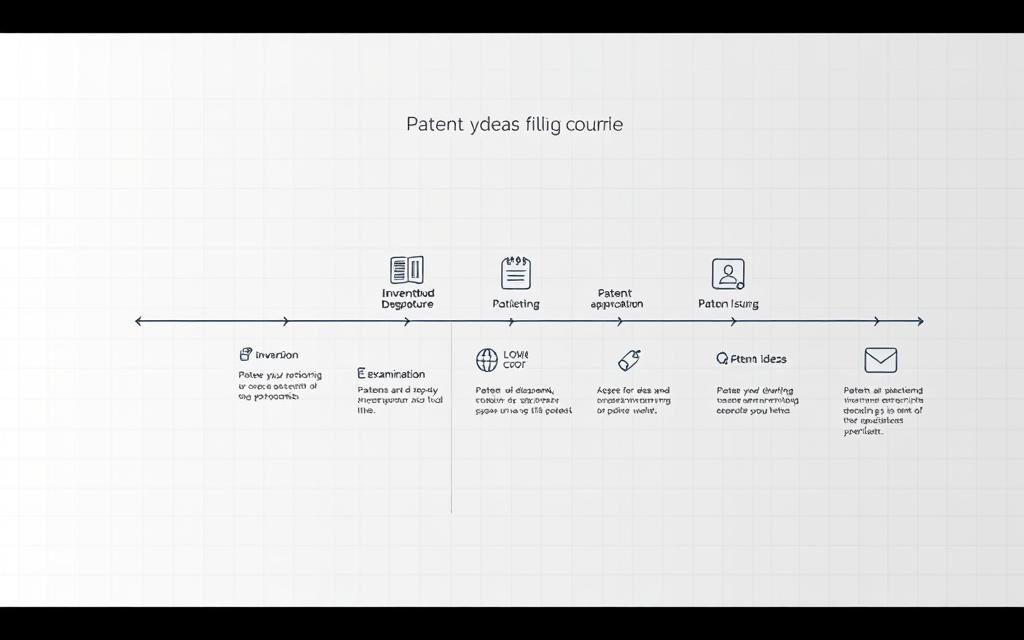
The steps to get a patent are important. They help protect your invention’s rights. Even without a prototype, you can increase your chances of getting a patent.
Conducting a Comprehensive Patent Search
First, do a deep patent search. This step checks if your invention is new and unique. Inventors should:
- Search the USPTO database a lot
- Look at international patent databases
- Keep track of similar inventions
- Check out competing technologies
Preparing Your Patent Application
Your patent application needs to be detailed. Write clear descriptions, make precise drawings, and state your claims well. Without a prototype, focus on detailed drawings that show how your invention works.
Filing with the USPTO
When filing with the USPTO, you have two choices. A provisional patent gives you a year to work on your invention. The non-provisional application offers full protection but needs more details.
About 40% of patent applications get rejected first. Getting help from a patent attorney can really help your chances of approval.
Common Misconceptions About Patents
Getting into patenting can be tough for inventors and business starters. Many new innovators believe wrong things about protecting their ideas. These myths can mess up their plans for keeping their ideas safe.
Myth: You Need a Working Model
Many think you must have a working model to get a patent. But, the United States Patent and Trademark Office (USPTO) doesn’t need a full model. Detailed drawings, clear descriptions, and tech specs are enough.
- Detailed sketches can replace physical prototypes
- Technical drawings must show the invention works
- Descriptions should explain how the invention works
Myth: Ideas Alone Are Patentable
Another big mistake is thinking you can just patent an idea. Legal protection for patents is more complex. You need to show:
- How the idea is put into action
- It’s new and not obvious
- It works in real life
Truth about Patent Expiration
Patents don’t last forever. Most patents end after 20 years from when you first apply. This short time shows why planning your patent filing and use is key. Inventors must plan well to get the most from their ideas.
Protecting Your Idea Before Filing
Inventors face big challenges when keeping their ideas safe before they file a patent. Having a good plan to protect your idea is key. It can help you keep your rights and stay ahead in the market.
When you file a patent without making a product, you need to be very careful. About 75% of inventors don’t write down their ideas well. This can make them very open to legal problems.
Non-Disclosure Agreements: Your First Line of Defense
Non-disclosure agreements (NDAs) are very important when you talk about your patent idea with others. These agreements stop others from sharing your idea without permission.
- Create detailed NDAs before you share your idea
- Be clear about what information is secret
- Make sure there are consequences if someone breaks the agreement
Documenting Your Innovative Concept
Writing down your idea in detail is key for a strong patent application. Inventors should keep good records of how their idea grew.
- Keep a notebook with dates
- Include sketches and detailed descriptions
- Save proof of when and how you came up with the idea
Employee Agreements and Intellectual Property
Inventors working in companies need to understand employee agreements. These agreements help figure out who owns the idea. About 50% of inventors get legal help to understand these agreements.
By using these strategies, inventors can keep their ideas safe before they file a patent. This helps them avoid risks and opens up more chances for success.
Costs Involved in Patenting
Getting a patent can be hard on your wallet. It’s important to plan and budget well. The cost depends on the patent type and how complex your invention is.
There are many costs to think about when filing for a patent. Each type of patent has its own price tag:
- Provisional patents: $1,500 – $3,500
- Design patents: $2,000 – $3,500
- Utility patents: $8,000 – $15,000
- Plant patents: Up to $16,000 for complex inventions
Application Fees
The USPTO has fees for patent applications. These include filing, search, and examination costs. Small and micro entities might get lower fees, saving money.
| Patent Type | Filing Fee | Search Fee | Examination Fee |
|---|---|---|---|
| Utility Patent | $300 | $660 | $760 |
| Design Patent | $200 | $160 | $400 |
Attorney Fees
Getting advice from a patent attorney is key but can be pricey. Costs range from $5,000 to $15,000, based on your invention. A good attorney can help you meet legal needs and get your patent approved.
Additional Costs for Prototyping
Prototyping is optional but can help your patent application. Costs vary, from $500 for simple designs to $10,000 for complex ones. Think if a prototype is worth the cost.
Risks of Not Having a Prototype
Getting a patent is tough without a prototype. Inventors often don’t see how important a prototype is. It helps a lot with getting and showing off their ideas.

Not having a prototype makes things hard. Startups and inventors need to know the risks. They must understand the challenges of moving forward without a real model of their invention.
Challenges During Patent Examination
Patent examiners check apps more closely without a prototype. Not having a model can cause:
- It’s harder to show if the invention works
- Apps might get rejected more often
- It takes longer to get through the exam
Potential for Infringement
It’s harder to keep your ideas safe without a prototype. Studies show that companies without models face:
| Risk Factor | Impact Percentage |
|---|---|
| Increased Infringement Vulnerability | 65% |
| It’s tough to prove your design is unique | 55% |
| It’s hard to defend your ideas legally | 47% |
Difficulty in Marketing Your Idea
Investors and partners want to see something real. Without a prototype, it’s hard to:
- Get investors interested
- Show how the product works
- Show it’s a good idea for the market
Most product failures happen because they didn’t test with users. Making a prototype can make your invention more appealing. It also lowers the risk of development problems.
How to Strengthen Your Patent Application
Creating a strong patent application needs careful planning, even without a prototype. You must pay close attention to every detail and document everything well. This helps your patent application get approved.
Inventors must make a strong patent application. It should show off what your invention can do. About 90% of patent applications get rejected first. So, it’s very important to prepare well.
Creating Detailed Drawings and Sketches
Good drawings are key to a successful patent application. They help explain complex ideas clearly. They show different ways your invention can work and how parts fit together.
Developing Comprehensive Descriptions
A detailed description is very important. It should use the right technical words. It should explain how your invention works and other ways it could be used.
Supporting Research and Documentation
Having strong documents can make your patent application look better. You should include things like:
| Documentation Type | Impact on Patent Application |
|---|---|
| Technical Research | Demonstrates invention feasibility |
| Market Analysis | Proves possible uses |
| Comparative Studies | Shows what makes your invention special |
Remember, good preparation can make your patent approval chances go up by 30%. Spending time on a detailed application is worth it to protect your idea.
Working with Patent Attorneys
Patent law is very complex. Patent attorneys are key in protecting your inventions. They help turn your ideas into safe assets. The right lawyer can help a lot in getting your patent.

Finding the right patent attorney is very important. Patent law is hard for beginners. You need a good lawyer to protect your ideas.
Finding the Right Patent Attorney
Look for these things in a patent attorney:
- They should know a lot about your field.
- They should have experience with similar patents.
- They should have a good track record of approvals.
- They should understand your industry’s problems.
Importance of Legal Guidance
Legal help is very important in the patent process. About 70% of inventors use patent attorneys. These experts help a lot:
- They do deep patent searches.
- They write strong application claims.
- They answer USPTO questions.
- They help avoid application rejection.
Questions to Ask Your Attorney
Ask these questions before hiring a patent attorney:
- Do you know a lot about my technology?
- How many patents have you successfully applied for?
- What will it cost for my patent application?
- Can you give me references from past clients?
Remember, good legal advice can really help protect your patent. It can also save you from big mistakes.
Post-Patent Filing Considerations
After filing a patent, inventors face a key phase. They must protect and use their intellectual property well. The patent filing timeline has many steps after the first application.
Maintaining Your Patent
Keeping your patent alive needs careful planning. You must pay fees at set times to keep it active. The USPTO charges these fees to keep your patent safe:
- First maintenance fee due 3.5 years after grant
- Second maintenance fee due 7.5 years after grant
- Final maintenance fee due 11.5 years after grant
Licensing Your Idea
Getting a patent legally can help you make money through licensing. You can earn by letting others use your invention. Smart licensing can turn your idea into a money-maker.
Monitoring for Infringements
Keeping your idea safe means watching closely. Whether you choose a provisional or non-provisional patent, you must be ready to defend it. Steps include:
- Regular market research
- Tracking competitor products
- Consulting with patent attorneys
Managing your patent well is key to its success.
Success Stories: Ideas Without Prototypes
Many new businesses started with just an idea. They got patent protection without a prototype. This helped them turn their ideas into real products.
Companies like Uber and Airbnb show how patents can lead to big changes. They started with ideas that changed how we travel and stay. Their success shows the power of protecting your idea early.
Those who succeed in selling their ideas do more than just get a patent. They think about what others might ask. Keeping good records and having many contacts helps them get funding or partners.
Success stories teach us that patents are more than legal papers. They’re about knowing what people need, telling a good story, and placing your idea in the right spot. By focusing on what customers want and keeping detailed records, you can make your idea into something big.