Do you know if someone is secretly taking your business’s identity? Trademark infringement can quietly harm your brand’s value and reputation. It’s very important to know how to file a trademark infringement case well.
The Lanham Act of 1946 helps protect trademarks in the United States. If another business uses your trademark without asking, you can take legal action. This process helps keep your intellectual property safe and stops confusion among customers.
A trademark is more than a logo or name. It’s what makes your brand stand out in a crowded market. Knowing how to file a trademark lawsuit is key to protecting your business or losing your brand’s value.
Key Takeaways
- Trademark infringement can significantly damage your brand’s reputation
- The Lanham Act provides legal protection for trademark owners
- Prompt action is key to stop brand misuse
- Legal remedies include money damages and court orders
- Getting help from a lawyer is very important in trademark disputes
Understanding Trademark Infringement
Trademark laws protect businesses and their brand identity. They stop others from using marks that confuse people about who made something.
Companies spend a lot to make their brand unique. These marks are very important. They help a company stand out in a crowded market. Knowing about trademark laws helps stop others from hurting their business.
Defining Trademark Infringement
The USPTO says trademark infringement is when someone uses a mark without permission. This can confuse people, make them think the wrong thing, or weaken a mark’s special quality.
Why Trademarks Matter
Trademarks are not just logos or names. They show a company’s reputation, quality, and promise. Keeping these marks safe helps a company stay unique and stop others from using their good name.
How Infringement Occurs
Trademark problems can happen in many ways. For example:
- Using a mark that looks too similar
- Creating packaging that looks almost the same
- Copying special designs
- Saying a product comes from somewhere it doesn’t
Getting a trademark registered is very important. It shows you own the mark and makes it easier to fight against people who might use it without permission.
Recognizing Infringement on Your Brand
Keeping your brand safe is very important today. If someone uses your trademark without permission, you could face big penalties. It’s key to spot these problems early.
To protect your trademark, you need to watch out for it. Look for how your brand is used online and in stores.
Signs of Infringement
Spotting trademark infringement means looking for certain signs:
- Similar logos or design elements
- Identical or very similar brand names
- Using your trademark without permission on products or ads
- Fake products that look like yours
Types of Infringement
There are different ways someone can use your trademark without permission:
- Direct Copying: Copying your trademark exactly
- Dilution: Making your trademark seem less special
- Counterfeiting: Making fake products with your trademark
Potential Business Impact
| Infringement Consequence | Potential Business Impact |
|---|---|
| Customer Confusion | Loss of brand reputation and customer trust |
| Revenue Loss | Reduced market share and possible sales drop |
| Legal Expenses | Expensive lawsuits and possible settlements |
Businesses must stay alert. The USPTO has 45 trademark classes. Fighting trademark infringement can cost a lot. Watching closely and acting fast helps keep your brand safe.
Steps to Take Before Filing a Lawsuit
Protecting your brand is key. You need to plan well before going to court. The trademark claim legal process is complex and needs careful thought and research.
Starting with the right steps is important. These steps can help shape your legal plan and the results you might get.
Conducting a Comprehensive Trademark Search
Finding out if someone is using your trademark is the first step. This means:
- Looking at trademarks already registered
- Checking state and federal trademark databases
- Seeing if there are any marks that could cause trouble
- Finding out if you might have legal problems
Gathering Compelling Evidence
Your lawyer will need lots of proof to support your case. Important evidence includes:
- Proof of when someone used your trademark without permission
- Proof that customers got confused
- Records of how much money you lost
- Materials that show your brand is well-known
Consulting with a Trademark Attorney
Getting a lawyer who knows trademarks is very important. They can help write a cease and desist trademark letter. They can also check if your case is strong enough to go to court.
The USPTO doesn’t watch trademarks. It’s up to the trademark owner to protect their mark. Usually, starting with a cease and desist letter can solve problems without needing to go to court.
Evaluating Your Legal Options
When you face trademark infringement, you must think about your legal steps. You need to weigh the risks and benefits of suing.
There are many ways to solve trademark disputes. Knowing these options helps you decide how to protect your brand.
Filing Against a Competitor
Deciding to sue a competitor is big. You must think about:
- How strong your evidence is
- The cost of the lawsuit
- How it will protect your brand
- If you can win
Alternative Dispute Resolution Methods
Before going to court, you can try other ways to solve disputes:
- Mediation: Working together to find a solution
- Arbitration: A formal way to settle disputes
- Cease and desist letters: A formal warning
Timing Considerations
| Legal Action | Typical Timeline | Potential Outcome |
|---|---|---|
| Cease and Desist | 1-2 Weeks | Immediate Trademark Protection |
| Mediation | 1-3 Months | Negotiated Settlement |
| Litigation | 6-24 Months | Comprehensive Legal Resolution |
Trademark disputes need careful planning. Each method has its own benefits and challenges. They help protect your brand in different ways.
Determining Your Trademark Rights
Protecting your brand is key. You need to know about trademark rights and how to enforce them. This is important for keeping your intellectual property safe and stopping others from using your brand without permission.
Businesses have two main ways to protect their trademarks. They can choose state-level or federal registration. Each option gives different levels of protection for your brand’s identity.
State vs. Federal Rights
State trademark rights protect your brand in one state. But, federal registration through the USPTO protects it everywhere in the country. Getting a federal trademark involves several important steps:
- Conducting a thorough trademark search
- Filing an application with the USPTO
- Showing that you use the mark in business
- Answering questions from the examiner
Registration Process
Getting a federal trademark shows you own it and gives you the right to use it everywhere. If someone tries to use your mark without permission, having a registered trademark helps a lot.
Establishing Use in Commerce
To get trademark rights, you must show you use the mark in business. This means using it in real business deals. The USPTO accepts three ways to prove this:
- Selling products directly
- Offering services
- Using the mark in marketing materials
Keeping an eye on your trademark and registering it wisely is key. By following these steps, you can protect your brand’s intellectual property well.
Filing a Trademark Infringement Lawsuit
Going to court for trademark issues needs careful planning. You must know a lot about protecting trademarks. This is key for winning your case.
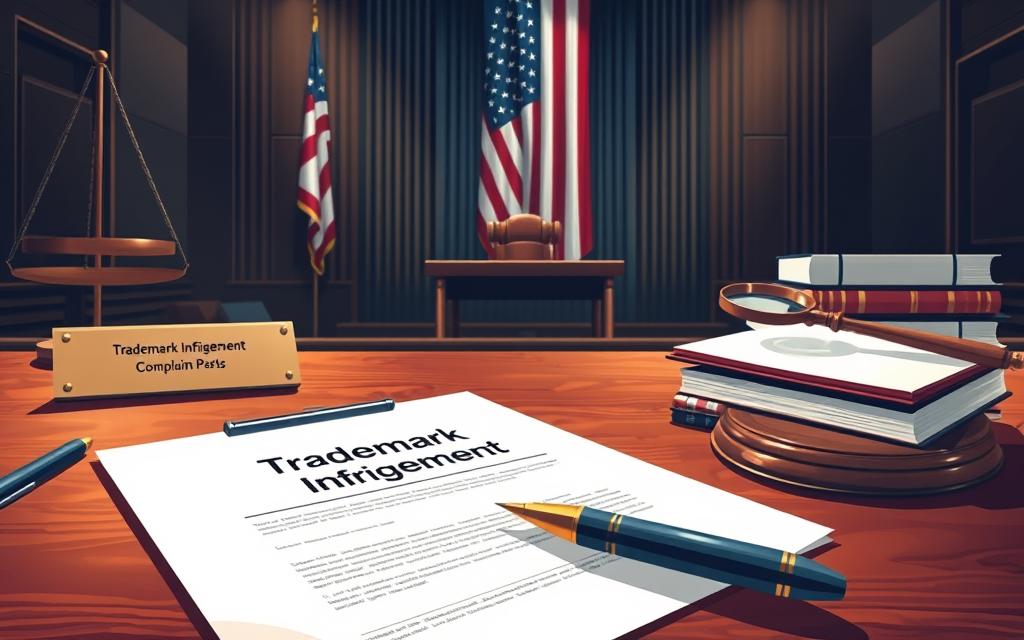
When you sue for trademark infringement, you must know how to build a strong case. There are important steps to take. These steps can really help your case.
Preparing the Complaint
Making a good complaint is the first step. You need to show:
- Proof you own the trademark
- Proof someone used it without permission
- How people might get confused
- How much money you lost
Selecting the Appropriate Court
Picking the right court is very important. Courts look at certain things to decide where to hear your case.
| Court Type | Key Considerations |
|---|---|
| Federal Court | Best for trademarks that are protected everywhere |
| State Court | Good for local or unregistered trademark issues |
Required Legal Pleadings
Winning in court means you need to show everything clearly. You need to include:
- A complaint that says someone is using your trademark wrong
- Proof that you own the trademark
- How much money you want back
- Why you want the other person to stop using your trademark
Legal fights over trademarks can cost a lot. They can cost between $120,000 to $750,000. Getting a good lawyer can really help you win.
The Role of Legal Representation
Trademark protection is complex. An attorney can help protect your brand. They know how to defend against trademark infringement.
Finding the right lawyer is key. They help with trademark laws. Lawsuits can cost a lot, from $120,000 to $750,000.
Finding a Trademark Attorney
Look for these qualities in a lawyer:
- They know a lot about intellectual property law.
- They have won cases before.
- They understand trademark rules well.
- They know your industry.
Benefits of Professional Legal Help
Lawyers bring many benefits:
- They do thorough trademark searches.
- They manage your trademarks well.
- They are good at negotiating and fighting in court.
- They help prevent legal problems.
Cost Considerations for Legal Counsel
| Service Type | Estimated Cost Range |
|---|---|
| Initial Consultation | $250 – $500 |
| Trademark Registration | $1,500 – $3,000 |
| Infringement Litigation | $120,000 – $750,000 |
Good lawyers can save you money. They stop expensive trademark fights and keep your brand safe.
Discovery Phase of the Lawsuit
The discovery phase is very important in trademark lawsuits. It’s when both sides look for and share key evidence. This evidence will help decide the case.
Trademark cases need careful planning and smart evidence gathering. Lawyers use many ways to understand if there’s infringement.
What to Expect During Discovery
Trademark owners should get ready for a deep investigation. This can take 6 to 12 months. The main goals are:
- Getting all kinds of documents
- Talking to important witnesses
- Getting business records
- Looking at marketing and how people see the brand
Types of Evidence Collected
Showing trademark infringement needs a lot of proof. Some important evidence is:
- Sales records showing market impact
- Marketing stuff
- Surveys of what people think
- Opinions from experts
Importance of Accurate Documentation
Keeping accurate records is very important. Businesses must have detailed records of their brand use, marketing, and any trademark issues.
Nowadays, about 70% of trademark cases use digital evidence. This is because most evidence is online.
Negotiating Settlements
Trademark disputes often need smart talks to keep your brand safe and cut down legal costs. Stopping trademark infringement needs a careful talk approach.
When to Consider Settlement
Businesses should think about settling early in trademark fights. Good times to talk about settling include:
- Before big legal costs pile up
- After finding all important documents
- After expert opinions are in
- Before going to a full trial
Successful Negotiation Strategies
Good talks need careful planning to protect your brand. Important steps include:
- Know what you must get
- Think about the money side
- Keep talks professional
- Look at other ways to solve problems
Pros and Cons of Settling
Settling trademark fights has good points and bad. It’s important to think it over well before deciding.
Good things are lower legal costs, quick fixes, and keeping business ties strong. But, there might be downsides like not fully protecting your trademark or not getting full payment for damages.
Getting advice from a lawyer is key. They help make sure your brand’s needs are met during talks.
Court Process Overview
Going to court for a trademark case needs careful planning. If talks fail, the case goes to court. Here, defending your trademark rights is key.

The court process has many important steps. Each step can change the case’s outcome. Trademark owners must be ready for every part of the case.
Initial Court Hearing
At the first court hearing, both sides share early arguments. They might ask for quick stops to the infringement. This stage is about:
- Showing early evidence of trademark use without permission
- Asking for quick stops to the infringement
- Setting the legal rules for the case
- Planning the next court dates
Going to Trial
The trial is when both sides share all their evidence. Important parts include:
- Picking a jury
- Making opening statements
- Showing all the evidence
- Listening to expert witnesses
- Questioning the other side’s witnesses
- Making final arguments
Potential Lawsuit Outcomes
Trademark cases can end in different ways. The court might decide on:
| Outcome Type | Description |
|---|---|
| Injunction | A court order to stop using the trademark |
| Monetary Damages | Money for losses caused by the infringement |
| Trademark Cancellation | Removing the infringing trademark |
| Attorney Fee Award | Repaying legal costs to the winning side |
Winning a trademark case needs good planning, strong lawyers, and knowing your rights.
Remedies for Trademark Infringement
Trademark penalties protect businesses from losing their ideas. If someone uses a trademark without permission, the owner can take legal steps. This helps keep their brand safe and gets them fair compensation.
There are many ways to get money back for trademark damage. This makes sure a business can keep its brand strong and its money safe.
Monetary Damages
Courts can give money to trademark owners in different ways:
- Money for what the trademark owner lost
- Money the infringer made
- Treble damages for knowing they were wrong
- Money for damage to their good name
Injunctions Against Infringers
Trademark owners can get a court order to stop someone from using their mark. This stops the bad use and keeps the mark safe. It can include:
- Temporary stop orders
- Orders to stop before it starts
- Orders to never use it again
Attorney Fees Recovery
In some cases, courts let trademark owners get their legal costs back. This is a warning to others not to copy and helps pay for protecting ideas.
Winning in trademark cases needs good planning and quick action. It keeps the brand safe and its place in the market.
Post-Trial Considerations

Winning a trademark lawsuit is just the start. Brand owners must keep watching for any trademark issues. They need to take steps to keep their brand safe.
Keeping trademarks safe means always being ready. Companies must have strong plans to stop others from using their brand. This helps protect their valuable ideas.
Appealing the Court’s Decision
If the court’s decision isn’t what you hoped for, you can appeal. The legal system has ways to challenge a. You should think about:
- Looking for mistakes in the trial
- Finding new evidence
- Talking to experts in trademark law
Enforcing Your Trademark Rights
Protecting your trademark needs a few steps. The Trademark Trial and Appeal Board (TTAB) helps solve trademark problems. You should:
- Keep records of any trademark issues
- Keep track of how your trademark is used
- Watch for any trademark problems
Importance of Continuous Monitoring
Being careful is key to keeping your trademark safe. Watching for trademark problems helps you act fast. Use new tools and services to guard your brand’s identity.
Preventing Future Infringement
Keeping your business trademarks safe is key. You need to always watch out and plan ahead to stop trademark problems. This keeps your brand safe from harm.
Strategic Trademark Monitoring
Good trademark watching means using many ways to protect. You should look for any misuse of your ideas online and in other places.
- Check online and databases often
- Look at industry news
- Watch digital stores
- Use tools to watch trademarks
Proactive Legal Measures
Stopping trademark problems starts with clear rules. You need strong plans to protect your brand.
- Have ready plans to stop misuse
- Keep records of how you use trademarks
- Make clear rules for using trademarks
Employee and Stakeholder Education
Teaching everyone about protecting ideas is very important. Training your team can help a lot in keeping your brand safe.
| Training Focus | Key Objectives |
|---|---|
| Trademark Recognition | Find and stop possible problems |
| Legal Compliance | Know the rules for using trademarks |
| Reporting Procedures | Make it easy to report issues |
Using these steps, you can build a strong defense for your trademarks. This helps keep your brand unique and safe.
Resources and Support for Trademark Holders
Understanding trademark laws can be hard for businesses and entrepreneurs. But, there are many resources to help trademark holders protect their rights.
Trademark holders can find many support channels. These help them deal with trademark law and get ready for lawsuits.
Government Agencies
The United States Patent and Trademark Office (USPTO) is very helpful:
- They have big trademark databases.
- They offer educational materials on registering trademarks.
- They have online tools to search for trademarks.
- They give guidelines on protecting trademarks.
Industry Associations and Organizations
Professional groups offer great support for trademark holders:
- The International Trademark Association (INTA) has a Pro Bono Clearinghouse.
- They have legal clinics for entrepreneurs.
- They offer free trademark consultations.
- They help you meet legal experts.
Educational Resources
It’s important to stay updated on trademark laws. Here are some key resources:
- Online trademark law webinars
- USPTO training programs
- Academic courses on intellectual property
- Professional development workshops
The INTA Pro Bono Clearinghouse is special. It connects people with volunteer lawyers all over the world. It helps low-income businesses and entrepreneurs with trademark issues.
Conclusion: The Importance of Protecting Your Brand
Keeping your brand safe is very important. It’s not just about registering it. You need to watch it closely and take action.
Businesses must always be ready to protect their trademarks. This means watching for problems and using legal help when needed.
There are many ways to protect your brand. The Lanham Act helps a lot. It lets you get money back and stop people from confusing your brand with others.
Trademark protection strategies can really help. They help keep your brand safe and your customers happy.
Keeping your brand safe takes a lot of work. You need to search for trademarks, register yours fast, and watch for problems. If you don’t, you could lose customers and money.
Protecting your brand is like investing in your future. It keeps your reputation strong and stops people from getting confused. It’s much better to spend time and money on defense than to deal with legal problems later.